~/magma-watch VOLCANIC LIVE 00:00:00 apps ← back to terminal
▲▲▲──/////──▲──────▲▲──────────/////──▲▲▲──▲──/////──▲▲▲── MAGMA WATCH ////// LIVE WORLD VOLCANIC ACTIVITIES ////// GVP+USGS ──▲──────────────────▲▲──/////──────────────────────▲▲──/////──

Magma Watch — Live World Volcanic Activities

Real-time global volcanic activity · USGS VHP + Smithsonian GVP data · Alert level filters · VEI comparator · Auto-refresh every 5min

Currently Erupting
confirmed active eruptions
On Alert
watch / warning level
Aviation Red / Orange
elevated aviation color codes
Highest VEI Active
eruption scale index
Monitored Worldwide
volcanoes in dataset
Active Regions
geographic zones with activity
Alert Level
Region
Type
Window: All 7d
Fetching data...
Live Volcanic Radar — GVP + USGS VHP 100% — volcanoes on map
Alert level →  Normal/Unassigned  Advisory  Watch  Warning  Erupting Size = VEI scale · Pulse = active eruption
Volcanic Activity Stream LIVE
Initializing volcanic feed...
Sources: USGS Volcano Hazards Program · Smithsonian Global Volcanism Program · Updates every 5min
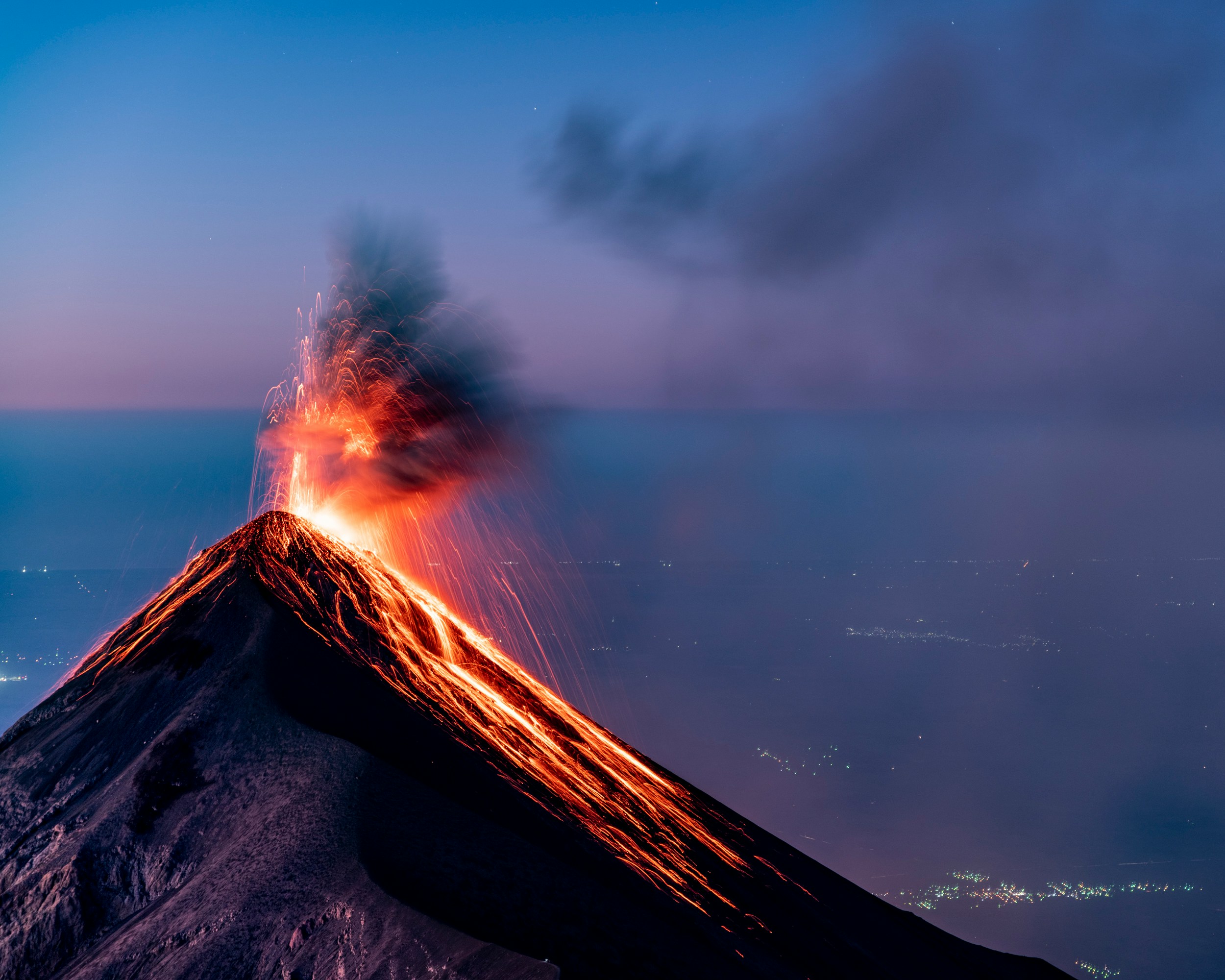
▲ Volcanic Photography 1 / 7
Volcanic activity photograph
Photo: Unsplash · Click to advance

Free Global Volcanic Activity Monitor — USGS VHP + Smithsonian GVP Data

Magma Watch is a free real-time volcanic activity dashboard combining data from the USGS Volcano Hazards Program (VHP) and the Smithsonian Institution Global Volcanism Program (GVP). The GVP has documented over 1,500 Holocene volcanoes — volcanoes that have erupted within the last 10,000 years — making it the most authoritative global volcanic dataset available. At any given time, approximately 20–30 volcanoes worldwide are in some stage of eruption, with hundreds more under elevated monitoring.

The live world radar plots monitored volcanoes using an equirectangular projection, with triangle symbols (▲) sized by the Volcanic Explosivity Index (VEI) and colored by current alert level: grey for normal or unassigned, green for advisory, yellow for watch, orange for warning, and pulsing red/orange for confirmed active eruptions. Hover over any triangle to see the volcano name, country, alert level, last eruption date, magma type, and VEI scale comparison.

Volcanic Explosivity Index (VEI) — Scale Comparator

The VEI is a logarithmic scale from 0 to 8 measuring the volume of material ejected and eruption column height. VEI 0–1 are effusive eruptions like Kīlauea's lava flows. VEI 4 (like Eyjafjallajökull 2010) disrupts global aviation. VEI 6 (like Pinatubo 1991) causes global cooling. VEI 8 is a supervolcano event — the last was Toba, Indonesia, 74,000 years ago, which nearly drove humans to extinction by triggering a volcanic winter. The largest VEI 8 eruption in recorded human history was the 1815 Mount Tambora eruption, which killed 71,000 people directly and caused the "Year Without a Summer" in 1816.

Alert Level System — USGS Color Code

The USGS uses a dual alert system: a ground-based alert level (Normal → Advisory → Watch → Warning) and an aviation color code (Green → Yellow → Orange → Red). Warning/Red indicates an eruption is occurring or imminent with significant volcanic ash cloud hazard to aviation. Other volcano monitoring agencies worldwide — including PHIVOLCS (Philippines), INGV (Italy), OVSICORI (Costa Rica), and GNS Science (New Zealand) — use similar tiered alert systems.

No Signup. No Ads. No Install.

Magma Watch runs entirely in your browser with no backend, no tracking beyond standard analytics, and no subscription required. It is one of over 90+ free browser tools at jasperbernaers.com. Companion app: Tectonic Pulse tracks real-time earthquake activity from the same USGS data infrastructure.

FAQ — Magma Watch: Live Volcanic Activity, Alert Levels & VEI Scale

Frequently Asked Questions — Magma Watch

Where does the volcanic activity data come from?

Magma Watch combines two primary sources. The USGS Volcano Hazards Program (VHP) publishes real-time Volcanic Activity Notices (VANs) for volcanoes in the United States and its territories, including Alaska (home to over 50 active volcanoes), Hawaii, and the Commonwealth of the Northern Mariana Islands. The Smithsonian Institution Global Volcanism Program (GVP) maintains the world's most comprehensive database of Holocene volcanoes, tracking approximately 1,500 volcanoes with eruption histories, alert levels, and ongoing activity reports. Together these cover the majority of the world's monitored volcanic systems.

What is the Volcanic Explosivity Index (VEI)?

The VEI is a logarithmic scale from 0 to 8 developed in 1982 by Chris Newhall and Steve Self to compare volcanic eruptions. Each unit represents a tenfold increase in ejecta volume. Key reference points: VEI 0–1 (effusive, continuous like Kīlauea) → VEI 2 (Stromboli-type, common) → VEI 4 (Eyjafjallajökull 2010, disrupted EU airspace for 6 days) → VEI 5 (Mount St. Helens 1980) → VEI 6 (Pinatubo 1991, lowered global temps by 0.5°C) → VEI 7 (Tambora 1815, 71,000 deaths, Year Without a Summer) → VEI 8 (Toba 74,000 years ago, possible near-extinction event). Most current eruptions are VEI 1–3.

What do the alert levels mean?

The USGS uses a dual notification system. The ground-based alert level runs from Normal (background, non-eruptive) → Advisory (elevated unrest above background) → Watch (heightened unrest, eruption may occur) → Warning (eruption is occurring or imminent). Simultaneously, an aviation color code runs Green → Yellow → Orange → Red. Red means an eruption is producing significant ash cloud that poses a hazard to aviation. The distinction matters: a volcano can be at Warning level but not Red if the eruption is effusive (lava flows only) without producing significant ash. Volcanic ash is catastrophic for jet engines, which is why aviation authorities monitor this separately.

How many volcanoes are actively erupting right now?

At any given moment, approximately 20–30 volcanoes worldwide are in some stage of eruptive activity, though the number depends heavily on how "eruption" is defined. Persistently active volcanoes like Stromboli (Italy), Yasur (Vanuatu), and Erta Ale (Ethiopia) have been erupting nearly continuously for decades or centuries. Major episodes at volcanoes like Merapi (Indonesia), Etna (Italy), and Popocatépetl (Mexico) recur regularly. The Smithsonian GVP tracks about 40–50 volcanoes per week as having "confirmed activity," including ongoing lava flows, eruption columns, and significant unrest.

Why do triangles appear on the map instead of circles?

The triangle (▲) is the internationally recognized cartographic symbol for a volcano on topographic maps, adopted by the International Association of Volcanology and Chemistry of the Earth's Interior (IAVCEI). On this radar, triangle size scales with the volcano's typical or historical VEI — larger triangles represent more explosive systems. Color represents the current alert level. A pulsing glow around the triangle indicates an active eruption is currently ongoing or was recently confirmed. Compare with the companion app Tectonic Pulse, which uses circles scaled by earthquake magnitude.

Which regions have the most active volcanoes?

Volcanic activity is concentrated along the same tectonic boundaries as earthquakes. The Pacific Ring of Fire hosts the majority — Indonesia alone has 147 volcanoes, more than any other country. Alaska's Aleutian Islands chain, Japan, the Philippines, and the Central American volcanic arc (Guatemala through Costa Rica) are consistently active. In Europe, Italy's Campania region (Etna, Stromboli, Vesuvius, Campi Flegrei) is the most closely monitored. The Mid-Atlantic Ridge (Iceland, Azores, Canary Islands) and the East African Rift (Nyiragongo, Erta Ale, Ol Doinyo Lengai) represent other major zones. Hawaii sits atop a hotspot unrelated to plate boundaries — the Pacific Plate moves over a stationary mantle plume, creating the Hawaiian island chain.

What is a magma type and why does it matter?

Magma composition determines eruption style and explosivity. Basaltic magma (low silica, ~50%) is fluid and gas-rich eruptions are effusive — lava flows easily, like Kīlauea. Andesitic magma (~60% silica) is more viscous, typical of subduction zone stratovolcanoes — moderate explosivity like Mount St. Helens. Rhyolitic magma (high silica, ~70%+) is extremely viscous, trapping gases that cause catastrophic explosive eruptions — like the Toba supervolcano. The magma type also determines whether a volcano produces lava flows, pyroclastic flows (devastating fast-moving clouds of hot gas and rock), lahars (volcanic mudflows), or large ash plumes. Calderas typically form when a magma chamber catastrophically empties, causing the overlying land to collapse.